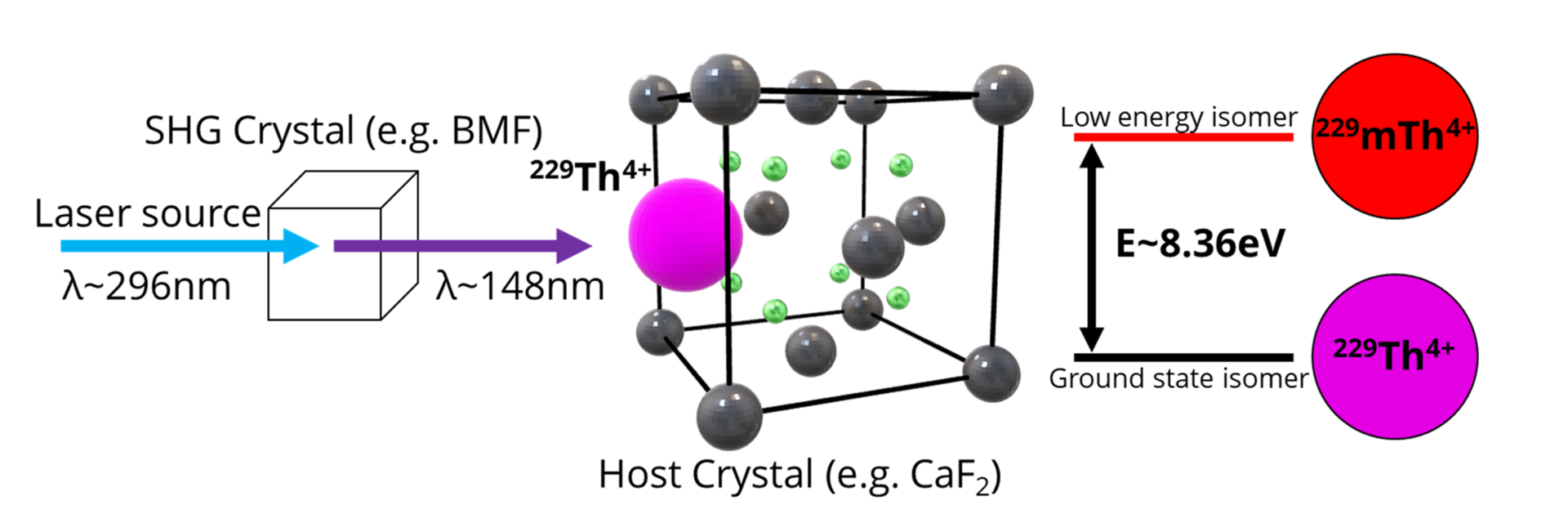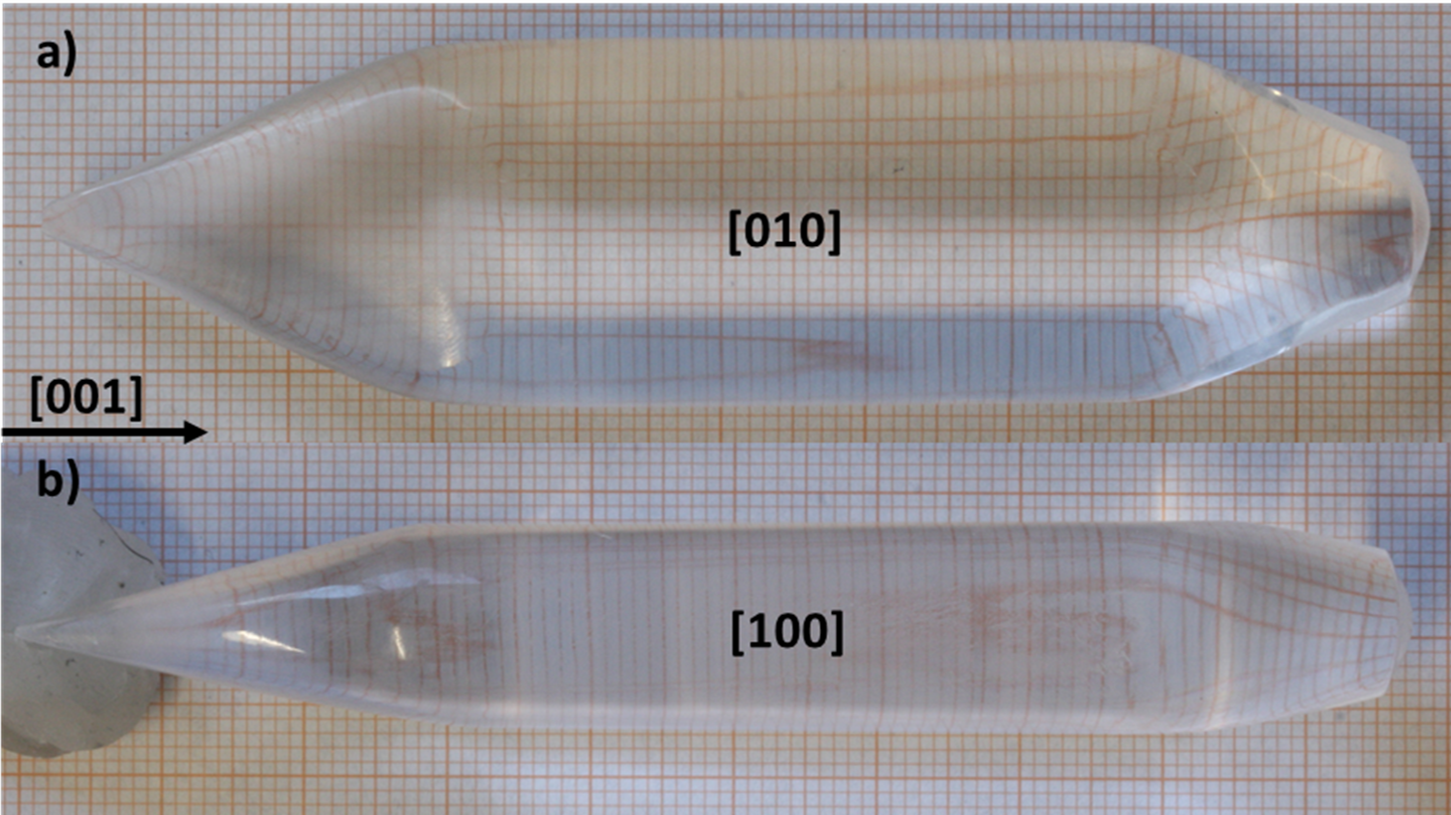
The awarded research centers on barium magnesium fluoride (BaMgF₄) crystals, which hold great potential for applications in optics and quantum technologies due to their unique properties. BaMgF₄ is an orthorhombic ferroelectric nonlinear optical crystal with an exceptionally wide transparency range (~130 nm to ~13 μm), enabling efficient frequency conversion in the vacuum ultraviolet (VUV). Through quasi-phase-matched second-harmonic generation, continuous coherent VUV radiation can be produced, which is suitable for exciting the nuclear transition of ²²⁹Th at approximately 148 nm.
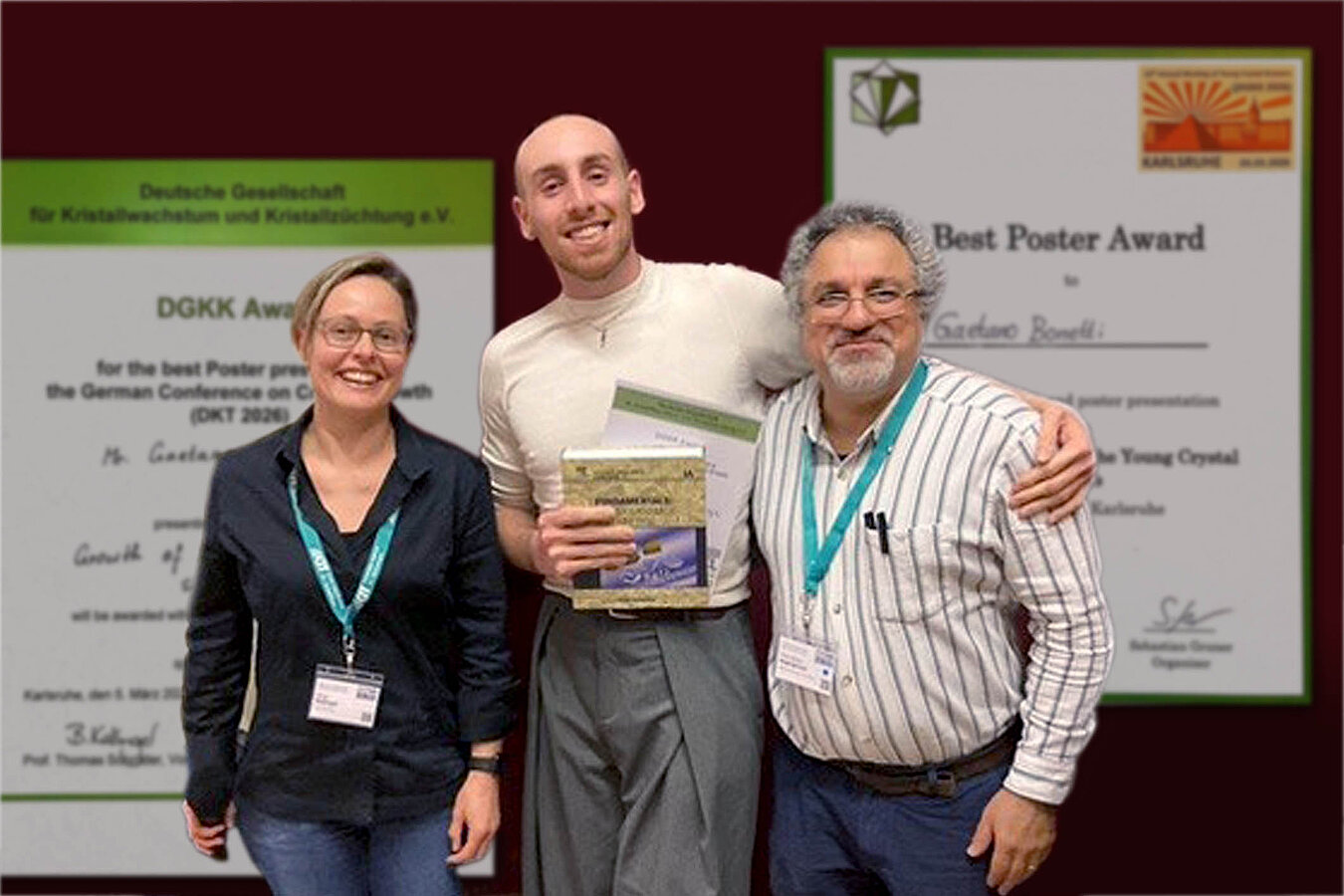
The first event, the 14th Annual Meeting of the Young Crystal Growers (jDGKK), took place on March 3, 2026, in Eggenstein-Leopoldshafen in association with the Karlsruhe Institute of Technology (KIT). The meeting is specifically aimed at early-career researchers in the field of crystal growth and serves as a pre-conference to DKT 2026. Its goal is to connect young scientists and students while providing a platform to present their work. Bonetti impressed the audience twice over, receiving both the Best Poster Award and the Lightning Talk Award.
Immediately following, the German Crystal Growth Conference (DKT 2026) was held in Karlsruhe from March 4 to 6, 2026. Also organized by the Deutsche Gesellschaft für Kristallwachstum und Kristallzüchtung e.V. (DGKK), the conference is considered a key event in the field of crystal growth and materials science. It focuses on both fundamental and applied aspects of crystallization, including the growth and characterization of semiconductor crystals, epitaxy of III/V semiconductors, and growth processes and their modeling. Applications in areas such as laser and optical materials, industrial crystallization, as well as solid-state and quantum materials are also covered. Here, Bonetti’s contribution was recognized with the Best Poster Award, too.
Bonetti’s current research focuses on gaining a better understanding of the BaF₂–MgF₂ phase diagram and optimized growth conditions to enhance crystal quality. These developments are part of the BMFTR project “UV-KrisP,” which is being carried out in collaboration with the Fraunhofer Institute for Physical Measurement Techniques (Fraunhofer IPM). The aim is to establish a new standard for the second through the development of a nuclear transition clock.