Near-infrared lasers are important tools in research and industry. In materials processing, lasers operating around 820 nanometers could, for example, improve laser-based cutting and welding of aluminum, which absorbs light in this spectral range particularly well. In quantum optics, precisely tunable lasers are needed for applications such as trapping atoms with light. Both high beam quality and precise wavelength control are crucial for these applications.
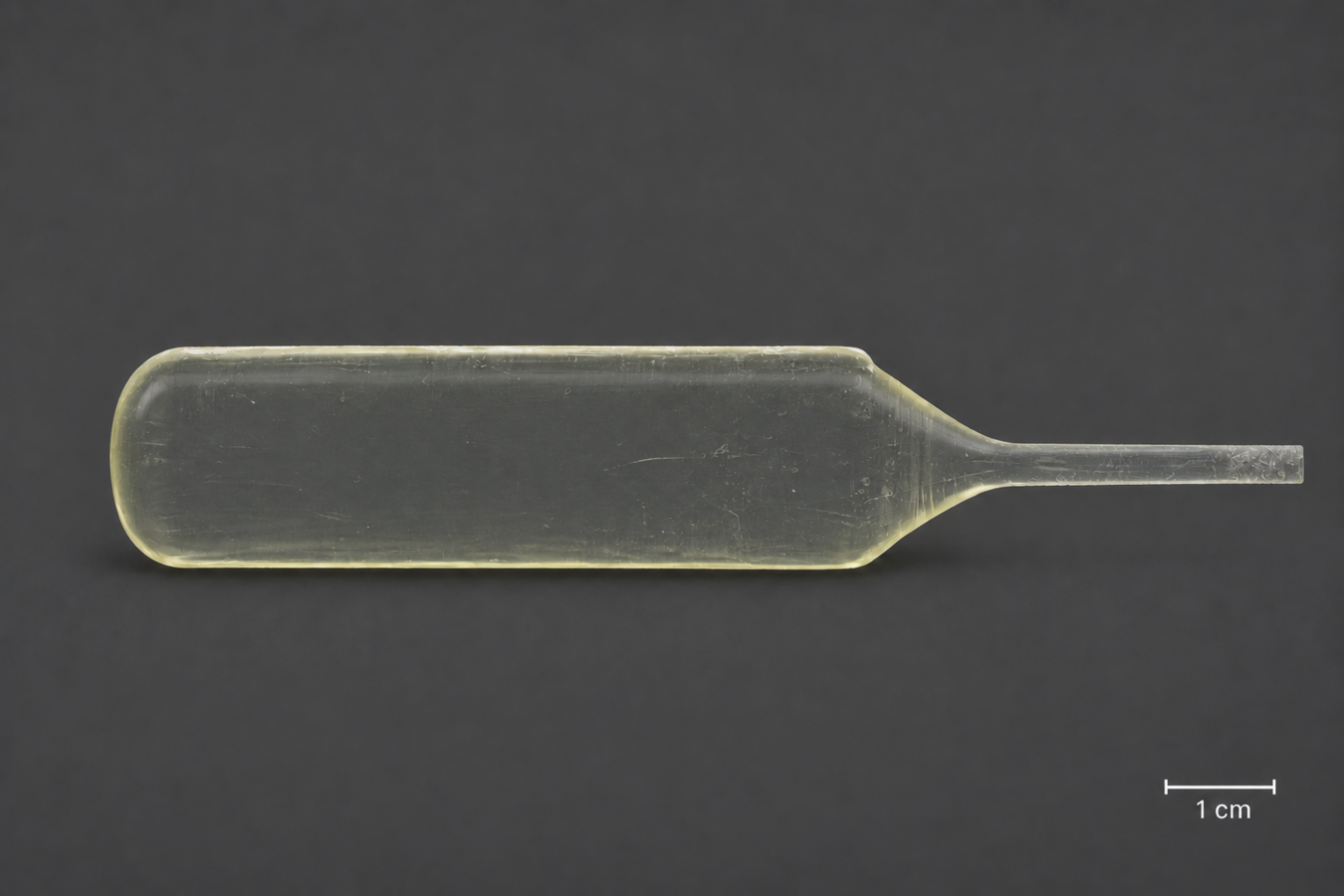
At the Center for Laser Materials (ZLM) at the IKZ, Dr. Sascha Kalusniak is pursuing an approach based on trivalent thulium ions. Initial experiments with thulium-doped lithium yttrium fluoride crystals have already shown that efficient continuous-wave laser operation around 820 nanometers is possible at room temperature. These results form the starting point for the Tm-820 project.
Tuning crystal composition and laser parameters
So far, two processes in particular have limited performance: the crystals absorb too little of the pump light used for excitation, and some of the absorbed energy remains in a long-lived intermediate state. This energy is therefore temporarily unavailable for the desired laser process.
The research team is therefore investigating various fluoride and oxide crystals with different thulium concentrations. The materials are grown at the IKZ and characterized in terms of their optical properties and performance during laser operation. In addition, different excitation schemes and laser operational parameters are being tested. The goal is to optimize the crystal composition and operating parameters to enable efficient laser operation using commercially available laser diodes as pump sources.
Prospects for compact, tunable laser systems
The investigations aim to provide clear criteria for selecting suitable laser crystals and designing future systems. In the long term, thulium-based solid-state lasers could offer a compact and powerful alternative to titanium sapphire lasers in this wavelength range. Frequency doubling would also enable the generation of light around 410 nanometers near the ultraviolet boundary - another wavelength region of interest for quantum optics.
Contact:
Leibniz-Institut für Kristallzüchtung (IKZ)
Center for Laser Materials
Application Science
Dr. Sascha Kalusniak
Phone: +49 (0) 30 / 246 499 615
Email: sascha.kalusniakikz-berlin.de